

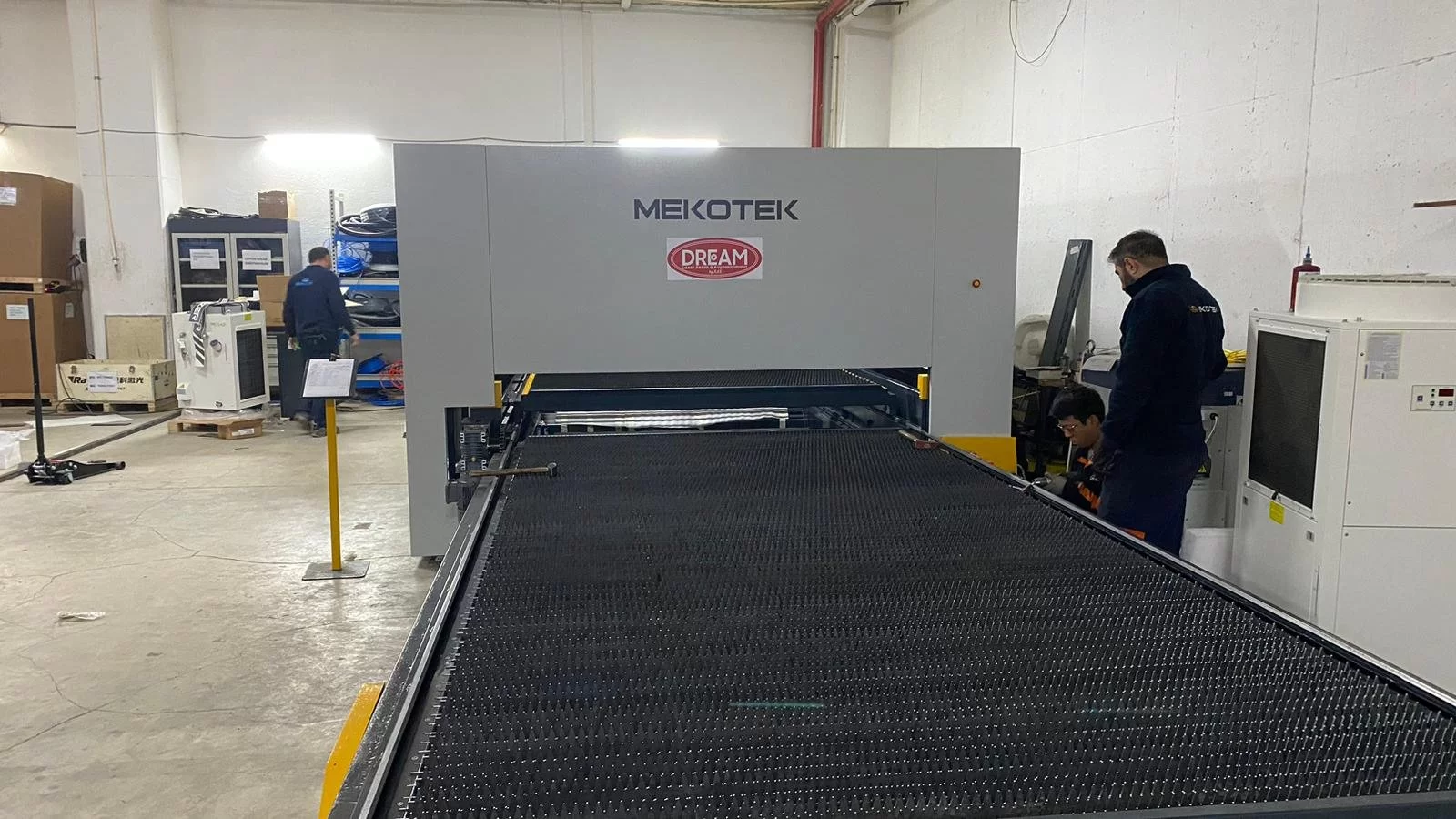
Laser cutting is an incredibly versatile and productive technology that allows for the processing of a wide range of materials and thicknesses with no limits to the shapes that can be achieved. The programming of laser cutting machines is so rapid that any changes at any stage of production can be implemented practically without additional cost or time. The precision is at the highest level, the cutting quality is excellent, and there is no deformation of the parts. The best application of laser technology is the processing of metal materials (mild steel, stainless steel, aluminum, copper, and brass) with thicknesses ranging from 0.8 mm to 30 mm.
The productivity of this technology can be further enhanced by a wide range of modular automation solutions that can help manage the entire production cycle, and by technology options that adapt laser cutting to specific customer requirements.
2D fiber laser cutting is a modern technology type that allows the cutting of flat metal sheets in a two-dimensional plane. This technology is widely used in various industries due to its high precision, speed, and flexibility. Let's delve deeper into the specifics of 2D fiber laser cutting.
Technology Fundamentals
Principle of Laser Cutting: The laser cutting process is executed by directing a focused laser beam onto the material. The laser beam forms a high-density energy source, which allows for the cutting of the material. In 2D fiber laser cutting, the laser beam moves in a two-dimensional plane, enabling the cutting of flat sheets.
Fiber Laser Technology: Fiber lasers utilize optical fibers to generate the laser beam. This technology provides high beam quality and efficiency. The advantages of fiber lasers include high energy density, low maintenance requirements, and long lifespan.
Applications
2D fiber laser cutting is widely used in various industries and applications:
-
Automotive Industry:
- Used for the precise cutting of vehicle bodies, chassis components, and other metal parts.
- Provides advantages in mass production due to rapid and repeatable cutting processes.
-
Aerospace:
- Delivers high-precision cuts for aircraft parts, engine components, and other aerospace applications.
- Effective for cutting lightweight and durable materials.
-
Electronics and Electrical:
- Utilized in the production of electronic circuit boards, thin metal components, and other precision electronic parts.
- High precision and low thermal effect prevent material damage.
-
Advertising and Signage Production:
- Employed for cutting metal signs, decorative pieces, and advertising products.
- Ideal for complex and customized designs.
-
General Metalworking:
- Applied in various industrial and commercial applications for cutting metal sheets.
- Effective for producing customized parts according to customer demands.
Advantages
High Cutting Precision: 2D fiber laser cutting can execute extremely fine and detailed cuts with high precision, which is particularly advantageous for producing parts with complex geometries.
Speed and Efficiency: The laser cutting process is extremely fast, which ensures high production efficiency. It offers time savings and cost-effectiveness in mass production processes.
Flexibility: 2D fiber laser cutting can be used for different types of materials and thicknesses. It can cut various metals such as steel, stainless steel, aluminum, copper, and brass.
Low Thermal Effect: During the laser cutting process, the thermal effect is kept to a minimum, reducing the risk of material deformation and enhancing the quality of the cuts.
Reduced Waste: High-precision cutting optimizes material usage and reduces waste. This provides cost savings and environmental benefits.
Maintenance and Operational Ease: Fiber lasers are known for their low maintenance requirements and long operational lifespan, which reduces operational costs and ensures uninterrupted production.
Cutting Process
-
Design and Preparation:
- The necessary design for the cutting process is prepared using CAD software. This design is digitally transferred to the cutting machine.
- The material is placed and secured on the cutting table.
-
Cutting Operation:
- The laser cutting machine directs the laser beam onto the material according to the design.
- The laser beam melts or vaporizes the material at the focused point, and the cutting process occurs.
-
Final Inspection and Processing:
- After the cutting process is completed, the parts are removed from the cutting table.
- The cut parts undergo quality control procedures and additional processes if required.
Cutting Parameters
Laser Power: Laser power affects the cutting speed and the quality of the material. Higher power allows for faster cutting of thick materials, while lower power is preferred for thin materials.
Cutting Speed: Cutting speed is adjusted according to the type and thickness of the material. Fast cutting is suitable for thin materials, while a slower speed is preferred for thick materials.
Gas Type: The type of gas used during the cutting process affects the cutting quality. Oxygen is commonly used for cutting steel, while nitrogen is preferred for cutting stainless steel and aluminum.
Focus Position: The focal point of the laser beam is adjusted according to the material's surface. Proper focusing enhances the cutting quality and ensures smooth edges.
Safety Measures
Safety measures are crucial during 2D fiber laser cutting operations. Here are some basic safety precautions:
- Protective Eyewear: Laser beams can damage the eyes, so operators must wear protective eyewear.
- Ventilation: Fumes and gases generated during the cutting process should be properly ventilated using appropriate systems.
- Machine Protection: Laser cutting machines should be equipped with safety covers and sensors to protect users.
Economic and Environmental Benefits
Cost Savings: 2D fiber laser cutting offers cost savings to businesses due to high efficiency and low maintenance costs. Additionally, material waste is minimized, reducing raw material costs.
Energy Efficiency: Fiber lasers consume less energy compared to traditional laser cutting technologies, reducing energy costs and minimizing environmental impact.
Environmental Impact: Laser cutting processes are environmentally friendly due to low waste production and energy efficiency. Additionally, chemical usage during laser cutting is minimal, reducing environmental pollution.
Future Developments
2D fiber laser cutting technology is an evolving field. Future advancements are expected to include higher-powered lasers, more precise cutting technologies, and advanced automation systems. Additionally, the development of technologies for cutting new materials is anticipated.
Conclusion
2D fiber laser cutting stands out as a revolutionary technology in the metalworking industry. Its high precision, speed, and flexibility make it widely used in various industries. This technology enhances efficiency in modern production processes and allows for quick and effective responses to customer demands.
As the technology continues to advance, the use of 2D fiber laser cutting machines is expected to become even more widespread, with increased application areas. This represents significant progress in innovation and quality within the metalworking industry.